×

News publications and other organizations are encouraged to reuse Direct Relief-published content for free under a Creative Commons License (Attribution-Non-Commercial-No Derivatives 4.0 International), given the republisher complies with the requirements identified below.

When republishing:

  • Include a byline with the reporter’s name and Direct Relief in the following format: "Author Name, Direct Relief." If attribution in that format is not possible, include the following language at the top of the story: "This story was originally published by Direct Relief."
  • If publishing online, please link to the original URL of the story.
  • Maintain any tagline at the bottom of the story.
  • With Direct Relief's permission, news publications can make changes such as localizing the content for a particular area, using a different headline, or shortening story text. To confirm edits are acceptable, please check with Direct Relief by clicking this link.
  • If new content is added to the original story — for example, a comment from a local official — a note with language to the effect of the following must be included: "Additional reporting by [reporter and organization]."
  • If republished stories are shared on social media, Direct Relief appreciates being tagged in the posts:
    • Twitter (@DirectRelief)
    • Facebook (@DirectRelief)
    • Instagram (@DirectRelief)

Republishing Images:

Unless stated otherwise, images shot by Direct Relief may be republished for non-commercial purposes with proper attribution, given the republisher complies with the requirements identified below.

  • Maintain correct caption information.
  • Credit the photographer and Direct Relief in the caption. For example: "First and Last Name / Direct Relief."
  • Do not digitally alter images.

Direct Relief often contracts with freelance photographers who usually, but not always, allow their work to be published by Direct Relief’s media partners. Contact Direct Relief for permission to use images in which Direct Relief is not credited in the caption by clicking here.

Other Requirements:

  • Do not state or imply that donations to any third-party organization support Direct Relief's work.
  • Republishers may not sell Direct Relief's content.
  • Direct Relief's work is prohibited from populating web pages designed to improve rankings on search engines or solely to gain revenue from network-based advertisements.
  • Advance permission is required to translate Direct Relief's stories into a language different from the original language of publication. To inquire, contact us here.
  • If Direct Relief requests a change to or removal of republished Direct Relief content from a site or on-air, the republisher must comply.

For any additional questions about republishing Direct Relief content, please email the team here.

After the Earthquakes, Venezuela Faces a Longer Health Emergency

The June 2026 earthquakes struck a health system and humanitarian response already under severe strain, according to Feliciano Reyna, founder and head of the Caracas-based humanitarian organization Acción Solidaria. The organization is working to support health services as the country rebuilds.

News

Venezuela Earthquakes 2026

A nurse with Acción Solidaria draws blood for a tesrt during a clinic day in Catia La Mar, Venezuela following the devastating earthquakes in June 2026.
A nurse with Acción Solidaria draws blood for a tesrt during a clinic day in Catia La Mar, Venezuela following the devastating earthquakes in June 2026. (Photo courtesy of Acción Solidaria)

Four months after two powerful earthquakes devastated northern Venezuela, aid workers say the country is confronting a deepening health crisis. Chronic illness, disrupted medical care, and psychological distress were already widespread before the quakes and have now become even more difficult to address.

The magnitude 7.2 and 7.5 earthquakes struck June 24, less than a minute apart, killing more than 6,300 people and displacing tens of thousands. La Guaira, a coastal state among the hardest-hit areas, suffered widespread building damage, and roughly 24,000 people remain in temporary shelters across affected states.

Feliciano Reyna, founder and head of the Caracas-based humanitarian organization Acción Solidaria, said the earthquakes struck a health system and humanitarian response already under severe strain. Reyna will be speaking at Direct Relief this week, along with and Patricia Velásquez, Founder of Fundación Wayuu Taya, another Direct Relief partner organization responding to the earthquakes.

“It’s important to take into account that we were coming, before the earthquakes, from a situation of [requiring] humanitarian assistance,” Reyna said to Direct Relief. “The earthquake happened in that context, not only in the effect on people’s lives, but also in regard to the lack of funding for the humanitarian response in Venezuela. And obstacles as well in terms of mobilizing aid into the country,” he said.

Reyna said Venezuela’s U.N.-coordinated humanitarian response plan received about 55% of requested funding in 2023, reaching roughly 63% of the 5.5 million people it aimed to help. By 2025, the plan received only about 20% of requested funding, he said. Before the earthquakes this year, about 18% of requested humanitarian funding had been provided for the year.

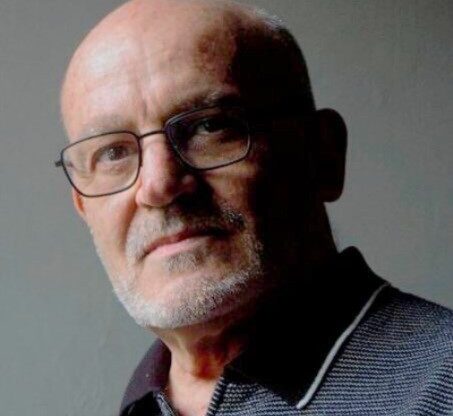
Feliciano Reyna, founder of Venezuela's Acción Solidaria
(Photo courtesy of Feliciano Reyna)

The immediate rescue phase has now largely given way to mobile medical and humanitarian outreach. Acción Solidaria teams travel to affected communities, working with local organizations and community leaders to provide medical care, psychosocial support, food and hygiene supplies.

“We need more of the essentials, definitely,” Reyna said, listing medicines for hypertension, diabetes, respiratory illnesses, anxiety and depression, seizure disorders and pain relief. “People have been asking for medicine to alleviate pain, including headaches, muscle aches.”

Many of those needs predated the disaster.

Reyna said teams are seeing patients with hypertension and diabetes, as well as pregnant women and children whose health needs were not always being adequately addressed before the earthquakes. Mental health needs, including anxiety and depression, have also grown amid displacement and uncertainty.

Access to care remains a major obstacle. In La Guaira, about half of health facilities were affected, Reyna said, and one of the region’s oldest hospitals is closed.

“It’s in really bad shape,” Reyna said. “Care is being given across the street.”

Some patients have traveled to hospitals in Caracas, he said, but many do not need specialized treatment, making mobile care a more practical option.

An Acción Solidaria worker unloads medical supplies for a frontline clinic in Venezuela following the June 2026 earthquakes.
An Acción Solidaria worker unloads medical supplies for a frontline clinic in Venezuela following the June 2026 earthquakes. (Photo courtesy of Acción Solidaria)

“We know there are so many that do not need urgent care or more complicated care, so it’s better to go to them,” Reyna said. To address this access gap in the weeks after the earthquake in La Guaira, Acción Solidaria began sending about 16 people, half of their total staff, to these mobile clinics, which treat hundreds of patients daily.

Currently, Acción Solidaria is partnering with local groups to provide holistic care, including pediatrics and at-home diagnostic tests, organizing about 60 healthcare providers and staff to be at each location they visit. They also use the opportunity to also conduct public health outreach, including about preventing the spread of HIV.

Underlying the earthquake response is a public health system that Reyna said was already failing to meet the needs of most Venezuelans. About 96% of the population relies on public care, he said, because private insurance and services are unaffordable for many families.

Even patients using the public system often have to pay privately, at rates that are unaffordable to many, for blood tests, X-rays and other diagnostics. Reyna estimated that 70% to 80% of equipment across the country’s roughly 280 hospitals is missing or in disrepair.

The consequences will extend well beyond earthquake injuries, he said. Venezuela still has patients who need dialysis, cancer treatment, surgery and cardiac care alongside the new demands created by the disaster.

“We will have to be doing quite some work to recover our capacity within the public health system,” Reyna said, “not only for those affected by the earthquakes, but the majority of the population who were already having deficient health services.”

Acción Solidaria has partnered with Direct Relief for ongoing medical support and aid following the earthquakes. As response to the recent earthquakes, Direct Relief provided medications and financial support to help the group expand warehouse capacity for storing and distributing medical aid, including temperature-sensitive medications.

Giving is Good Medicine

You don't have to donate. That's why it's so extraordinary if you do.

Hear From Direct Relief

Get stories, emergency updates, and humanitarian impact delivered to your inbox.