Include a byline with the reporter’s name and Direct Relief in the following format: "Author Name, Direct Relief." If attribution in that format is not possible, include the following language at the top of the story: "This story was originally published by Direct Relief."
If publishing online, please link to the original URL of the story.
Maintain any tagline at the bottom of the story.
With Direct Relief's permission, news publications can make changes such as localizing the content for a particular area, using a different headline, or shortening story text. To confirm edits are acceptable, please check with Direct Relief by clicking this link.
If new content is added to the original story — for example, a comment from a local official — a note with language to the effect of the following must be included: "Additional reporting by [reporter and organization]."
If republished stories are shared on social media, Direct Relief appreciates being tagged in the posts:
Twitter (@DirectRelief)
Facebook (@DirectRelief)
Instagram (@DirectRelief)
Republishing Images:
Unless stated otherwise, images shot by Direct Relief may be republished for non-commercial purposes with proper attribution, given the republisher complies with the requirements identified below.
Maintain correct caption information.
Credit the photographer and Direct Relief in the caption. For example: "First and Last Name / Direct Relief."
Do not digitally alter images.
Direct Relief often contracts with freelance photographers who usually, but not always, allow their work to be published by Direct Relief’s media partners. Contact Direct Relief for permission to use images in which Direct Relief is not credited in the caption by clicking here.
Other Requirements:
Do not state or imply that donations to any third-party organization support Direct Relief's work.
Republishers may not sell Direct Relief's content.
Direct Relief's work is prohibited from populating web pages designed to improve rankings on search engines or solely to gain revenue from network-based advertisements.
Advance permission is required to translate Direct Relief's stories into a language different from the original language of publication. To inquire, contact us here.
If Direct Relief requests a change to or removal of republished Direct Relief content from a site or on-air, the republisher must comply.
For any additional questions about republishing Direct Relief content, please email the team here.
Hurricane Isaias moves towards the U.S. Gulf Coast on Oct. 9, 2026. Direct Relief is in communication with health facilities across the region about potential medical needs. (NOAA image)
Over the past week, Direct Relief sent 190 shipments of requested medical aid, containing 6 million defined daily doses of medication, to organizations across 32 U.S. states and territories and 21 other countries.
Shipments sent this week included rare disease medications, cancer therapies, diabetes treatments, antibiotics, and midwife kits.
Hurricane Isaias Set to Make Landfall as Major Category 3 Storm
Hurricane Isaias’ track toward the U.S. Gulf Coast as seen on Oct. 9, 2026. (Direct Relief image)
Hurricane Isaias is expected to make landfall tonight as a major Category 3 storm near Pensacola, Florida, with sustained winds near 120 mph. Mandatory evacuations are in effect across several Gulf Coast counties, with officials warning of dangerous storm surge, flooding, and power outages.
Direct Relief has been coordinating with health organizations across the Gulf Coast ahead of the storm, including more than 70 free and charitable clinics and federally qualified health centers already equipped with emergency medical supplies. The organization has also prepositioned emergency stockpiles of medicines and supplies with local healthcare providers in the storm’s current path, building on its year-round investments in disaster preparedness across the region.
“Our year-round investments in preparedness make it possible to move quickly when a storm threatens,” said Meghan Corneal, Direct Relief’s Emergency Response Manager for the Southeastern U.S. “We place large emergency stockpiles of medicines and supplies with local healthcare providers ahead of hurricane season. Several of those stockpiles are in the storm’s current projected path, giving providers resources already on hand to care for their communities.”
Direct Relief will continue to monitor the storm as it moves inland over the weekend and is in close contact with partners across the region, including health centers in Alabama, Kentucky, Tennessee, and Pennsylvania, to identify needs as conditions evolve.
Doctor’s Presence Brings Comfort to Flood-Affected Nepal Community
Dr. Prakash Yadav sees patients at a field clinic established by Mountain Heart Nepal, with Direct Relief’s support, in Kispang Rural Municipality-5, Nuwakot, providing ongoing care to communities affected by recent flooding. (Photo by Mountain Heart Nepal)
Dr. Prakash Yadav has been working full-time in Kispang Rural Municipality, Nuwakot, since October 3 with support from Direct Relief, providing care across three locations, including a tented clinic in Ward 5 that requires about an hour’s walk to reach due to damaged roads and bridges. On October 5 and 6 alone, he treated 49 patients, addressing infections, injuries, and chronic conditions including diabetes, hypertension, and COPD, while also supporting people experiencing distress since the floods.
“People are very happy that a doctor is now close to their home, almost at their doorstep,” Yadav said. “They feel reassured knowing that when they are unwell, frightened, unable to sleep, having palpitations or shortness of breath, there is someone nearby who can examine them, listen to them and help.”
Yadav will remain in Kispang over the coming months so patients can continue receiving care and follow-up treatment. His daily reports, along with feedback from local health workers and families, are helping guide ongoing support for medicines, supplies, and psychosocial care as the community continues its recovery.
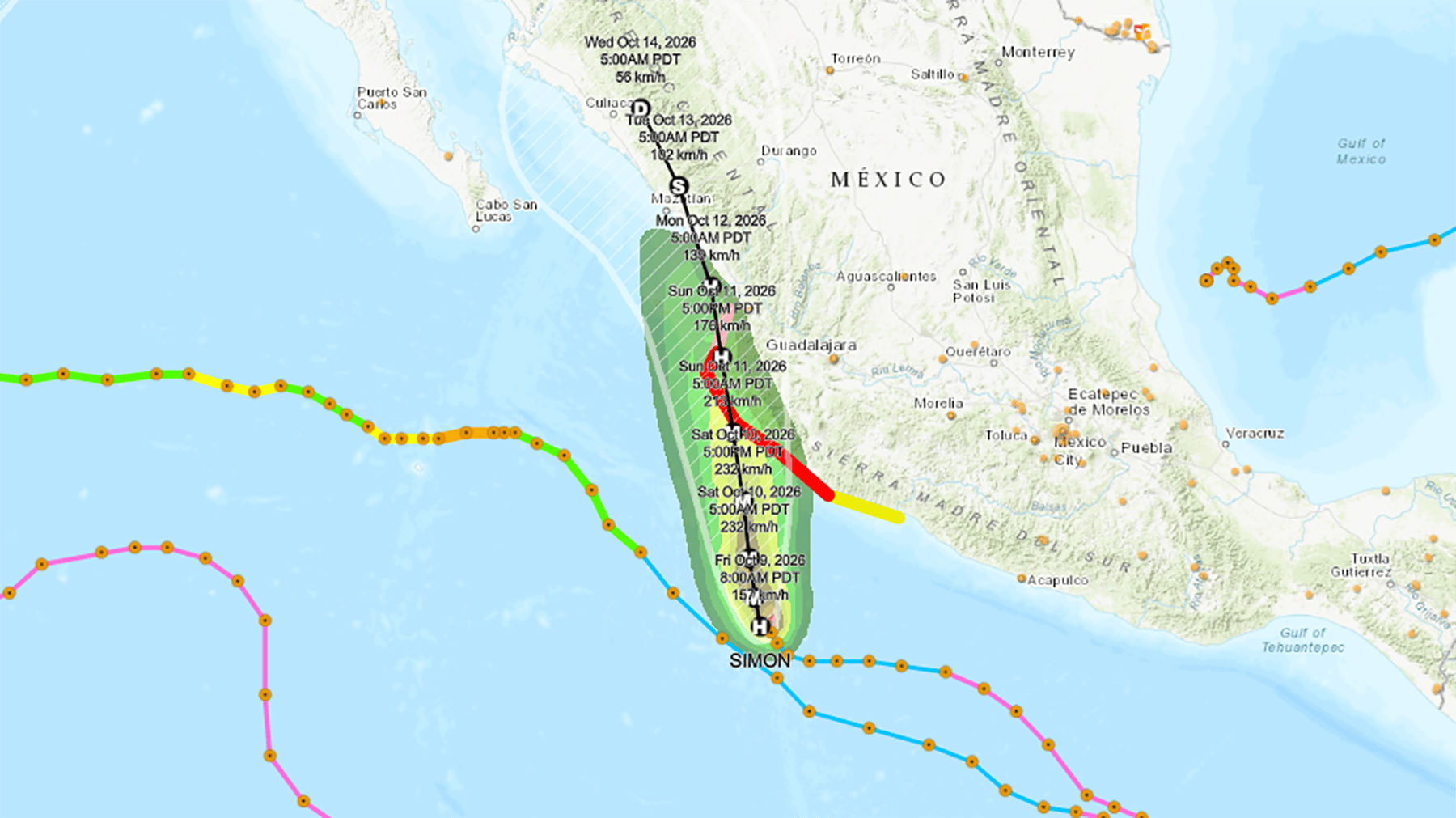
Direct Relief Monitors Hurricane Simon Along Mexico’s Western Coast
Hurricane Simon’s track as seen on Oct. 9, 2026. (Direct Relief map)
A hurricane warning is in effect along Mexico’s western coast as Hurricane Simon rapidly intensifies, bringing high winds, heavy rainfall, and dangerous storm surge that could cause coastal flooding. Direct Relief is in contact with local partners to assess needs as the storm approaches.
Partner organization Centro Regulador de Urgencias Médicas Guerrero is monitoring the situation in the region, reporting heavy rain in some areas while conditions have begun to improve elsewhere. Direct Relief has offered Centro Regulador de Urgencias Médicas Guerrero its inventory of supplies, including field medic packs for first responders, essential medicines, and personal care items for displaced people, should needs arise, and has also reached out to Fundación Punta de Mita ahead of the storm to offer support.
Direct Relief remains on standby and will continue coordinating with partners as Simon’s impact becomes clearer.
Operational Snapshot
United States
Direct Relief sent 139 shipments valued at approximately $528,730 to organizations in 45 states and territories. The shipments weighed 16,361 pounds and contained 313,521 defined daily doses of medication.
Dream Centers Women’s Clinic, Colorado
Flagler County Free Clinic, Florida
UMC Free Clinic, Florida
Hope Clinic And Care Center Inc., Wisconsin
St. Vincent De Paul Clinic, Arizona
Lakeland Volunteers in Medicine, Florida
Arlington Free Clinic Pharmacy, Virginia
La Community Health Center, California
Nurses Global Outreach ICT Street Team, Kansas
Guadalupe Clinic, Kansas
Around the World
Outside the U.S., Direct Relief sent 5.6 million defined daily doses of medication, weighing 56,006 pounds.